
By Taitianna McGrath (Task 2)
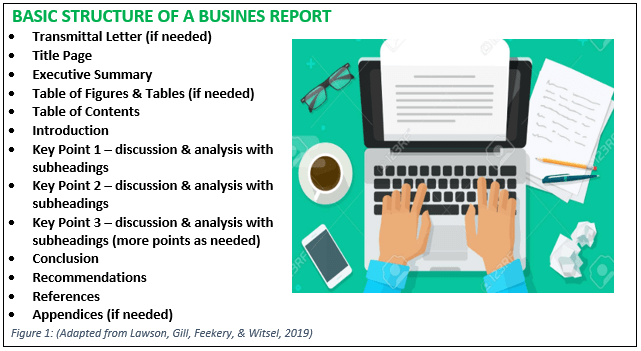
There are various key steps which are necessary in the process of producing an effective business report. Figure 1 shows a basic report structure which can be adapted and modified as required and can vary in length. Other structures can also be adopted so long as they are from valid academic sources.
Business reports are important writing tools in the business world, used essentially to communicate detailed information. They are highly informative and very useful for decision-making, presenting critical analysis and evaluation regarding a particular issue (Lawson, Gill, Feekery, & Witsel, 2019). Before commencing writing, it is important to understand the purpose of the report and the audience, ensuring a targeted and clear piece of writing which is written in the third person and within a specified word count (Jena, 2017). It is likely that this requires some initial research and planning.
All business reports require a title page to create an appealing first impression for the reader, presenting key information such as the title, author and date. An executive summary is written for the busy executive and is essential, providing a clear and concise summary of the purpose of the report, its key findings and any major recommendations. Furthermore, the table of contents and table of figures and tables follow the executive summary, sits on their own pages and their purpose is to provide the reader with an outline of sections of the report.
The introduction is important as it summarises the focus issue, provides any background information and describes the scope and purpose of the report. The body is the next section of the report which is the largest and provides the full analysis which is split into various logical sections through appropriate headings and sub-headings (Kaul, 2014). Moreover, the conclusion and recommendations provides a clear summary of the report and offers specific steps and solutions for the business to address any current issues (Chia & Round, 2015).
To demonstrate further evidence, it is vital that the report acknowledge all sources used, both in-text and in the reference list. Additionally, certain information can be presented as images, graphs and tables to enhance the report and can be included in the body or as appendices. Lastly, effective drafting, proofreading and formatting of the report is crucial to demonstrate professionalism, consistency and validity (Washington, 2014).

 LOST IN COMMUNICATION